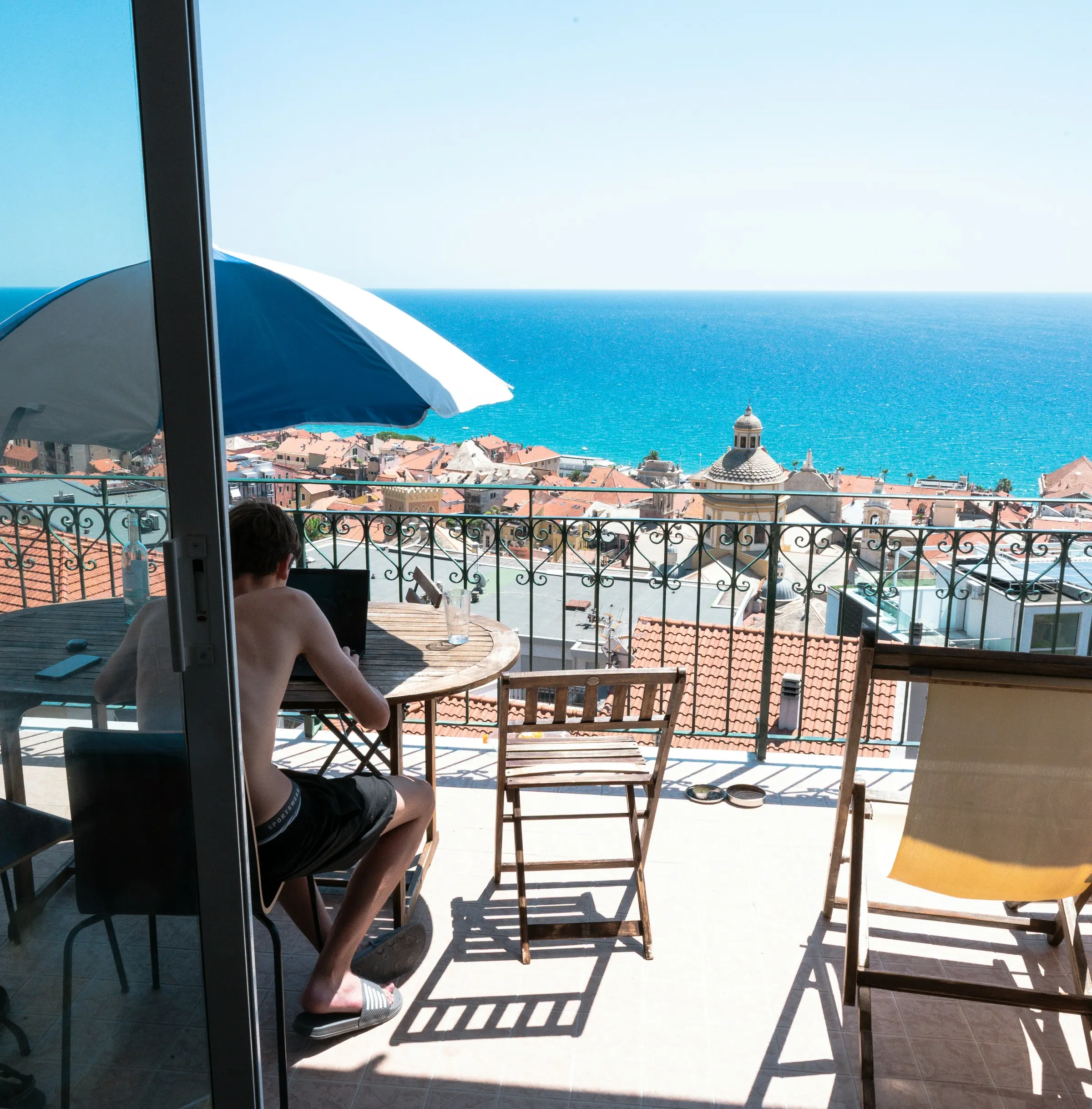
Table and chair on a balcony overlooking the sea

Revenue Management

Every Night Has a Price. Find the Right One.

Commercial management for boutique hotels, suites and villas in Santorini. Pricing, forecasting, distribution and direct booking strategy, managed with discipline and explained in plain language.

The principle

Revenue management is not about charging more. It is about selling the right room, to the right guest, through the right channel, at a price that reflects real demand.

Why it matters to owners

Your Rate Strategy Is Your Business Strategy

Most of a hotel’s cost base is fixed before the first guest arrives. What changes the outcome of a season is how well each night is priced and sold. A room sold too cheaply in July is revenue that cannot be recovered; a room held at a rate the market will not pay is a night that earns nothing at all.

Good revenue management turns that daily decision into a method. It combines demand analysis, forecasting, pricing and distribution so that rates move for a reason, not by habit or by guesswork. For owners, the value is visibility and control: knowing what the property is likely to earn, why, and what is being done to improve it.

We will not promise you a fixed increase. No honest partner can, because results depend on the property, the market and the season. What we commit to is a rigorous process, decisions grounded in your own data, and reporting that shows clearly where revenue comes from and what it costs to acquire.

Caldera cliffs of Santorini with whitewashed villages along the rim
Demand on the caldera changes week by week, and so should pricing.

What we do

The Disciplines of
Commercial Performance

Revenue management draws on several connected disciplines. Under a Commercial Management engagement, we take responsibility for all of them.

Revenue strategy

A season plan that sets out positioning, target segments, rate structure and channel priorities, agreed with you before the season opens and reviewed as demand develops.

  • Annual commercial plan and budget
  • Rate structure and BAR positioning
  • Segment and channel targets
  • Opening and closing date strategy

Dynamic pricing

Rates adjusted in response to demand, pace, competitor movement and events, by date and by room type. Pricing is managed actively, every day in season, rather than set once and left alone.

  • Daily rate review in season
  • Room-type differentials
  • Length-of-stay and arrival controls
  • Promotions used deliberately, not by default

Demand analysis and forecasting

We study your booking history, pickup and on-the-books position to forecast occupancy and revenue by period, then use that forecast to make pricing and staffing decisions earlier.

  • Occupancy and revenue forecasts
  • Pace and pickup tracking
  • Booking window and lead-time analysis
  • Cancellation and no-show patterns

Distribution and OTA management

Your property presented accurately and competitively on each channel, with content, parity and inventory checked and maintained. OTAs are valuable partners when they are managed, not when they manage you.

  • OTA extranet management and content
  • Channel manager configuration
  • Rate parity monitoring
  • Metasearch presence

Channel mix and direct booking

We look beyond headline revenue to net revenue after commission and acquisition costs. Shifting a sensible share of bookings to direct channels is one of the most effective commercial levers available to an independent property.

  • Channel mix analysis by net contribution
  • Booking engine and direct rate strategy
  • Direct booking benefits that make sense
  • Coordination with digital growth campaigns

Competitive benchmarking

A carefully chosen competitive set, monitored for rate, availability and positioning. We use the compset as context for decisions, never as a reason simply to follow the market down.

  • Compset selection and review
  • Rate shopping and positioning
  • Review score and value perception
  • Market and event calendar

Key metrics

The Language of
Hotel Revenue

These are the measures we use to plan and report. We explain them here so that every conversation about your property’s performance starts from a shared understanding.

ADR Average Daily Rate
Room revenue divided by the number of rooms sold. It shows the average price achieved per occupied room, but on its own says nothing about how many rooms stayed empty.
OCC Occupancy
Rooms sold divided by rooms available, expressed as a percentage. High occupancy at a low rate can be a weaker result than slightly lower occupancy at a stronger rate.
RevPAR Revenue per Available Room
Room revenue divided by the number of rooms available, or ADR multiplied by occupancy. It combines price and volume into a single measure of how well inventory is being sold.
TRevPAR Total Revenue per Available Room
Total property revenue, including food and beverage, spa, transfers and other services, divided by rooms available. It reflects the full commercial value of each room to the business.
GOPPAR Gross Operating Profit per Available Room
Gross operating profit divided by rooms available. It brings costs into view and is often the measure that matters most to an owner, because revenue earned expensively is not the same as profit.
Net RevPAR Net revenue and cost of acquisition
RevPAR after deducting distribution costs such as OTA commission, payment fees and marketing spend attributed to bookings. Cost of acquisition is what it costs, on average, to win each booking through a given channel.
Pace Pace and pickup
Pace compares the bookings currently on the books for a future date with the position at the same point in previous periods. Pickup is the number of rooms or revenue added over a set time, such as the last seven days.
LOS Length-of-stay controls
Rules such as minimum stay, maximum stay, closed to arrival and closed to departure, applied to specific dates. Used well, they protect high-demand nights and reduce gaps that are hard to sell.

The Santorini season

A Short Season Changes Every Decision

Santorini’s main season runs roughly from April to October, with demand concentrated in the summer months. That compression makes revenue management both more important and less forgiving than in a city hotel that trades all year.

Fewer nights to get it right

With a limited number of selling nights, each one carries more weight. Underpricing a handful of peak dates can shape the result of the whole year. We review peak periods early and protect them with deliberate rate and stay controls.

Booking windows matter

Guests travelling to the island often book well ahead, while others book late once flights and plans are fixed. Understanding how far in advance your guests book, by market and by room type, decides when to hold rate and when to release availability.

The shoulder months deserve their own strategy

Spring and autumn are not just quieter versions of summer. They attract different guests with different motivations, and they respond to different offers and stay patterns. A separate shoulder strategy can make a meaningful difference to the year without discounting the peak.

Opening and closing dates are commercial decisions

When to open and when to close affects revenue, payroll and maintenance at once. We look at forecast demand alongside operating cost so the decision is made on evidence, ideally months before the season begins.


How decisions are made

Pricing Sits at the Centre
of Connected Information

No single data point sets a rate. Each pricing decision draws on several sources, read together and weighed against the property’s own strategy.

  1. Your booking data

    History, on-the-books position, pace and pickup from your PMS and channel manager.

  2. Market demand

    Event calendars, flight capacity signals and seasonal patterns on the island.

  3. Competitive set

    Rates, availability and positioning of comparable properties.

  4. Channel economics

    Commission, acquisition cost and net contribution by channel.

  5. Guest perception

    Review scores and comments that shape what guests feel is fair value.

  6. Operating reality

    Staffing, maintenance and capacity constraints that affect what can be sold.

Commercial reporting

Reporting That Explains,
Not Just Records

You will receive a monthly commercial report and, during the season, a short weekly update. Each one sets out where the property stands, how that compares with budget and last year, and what we are changing as a result.

  • Occupancy, ADR and RevPAR
  • TRevPAR and ancillary revenue
  • On the books and pace by month
  • Pickup over the last period
  • Channel mix and net revenue
  • Cost of acquisition by channel
  • Compset rate positioning
  • Forecast against budget
All figures are drawn from your own systems. Reports are tailored to each owner and property.

Questions from owners

Revenue Management, Answered

Can you guarantee an increase in revenue?

No, and we would be cautious of anyone who does. Revenue depends on the property, its condition, the market and the season. What we can commit to is a structured method, active daily management in season and transparent reporting, so you can see the effect of every decision.

My property is usually full in summer. Do I still need revenue management?

Very often, yes. A property that is full early in the year may be priced below what the market would pay. Revenue management looks at when rooms are sold, at what rate and through which channel, not only whether they are sold.

Do I need to change my PMS or channel manager?

Not necessarily. We start by working with the systems you already have. If something limits what can be done, such as a booking engine that cannot support the rate structure you need, we will explain the issue and the options. Our technology work with PAVLA can help where changes make sense.

Will you cut my reliance on OTAs entirely?

That is rarely the right goal. OTAs bring visibility and demand that many independent properties need. The aim is a healthy channel mix, where each channel earns its place on net contribution and direct bookings grow where they sensibly can.

Who makes the final pricing decisions?

Under a Commercial Management engagement, we manage pricing day to day within a strategy and boundaries agreed with you, such as minimum rates or protected dates. Major strategic changes are discussed with you first.

Can Commercial Management work if I run operations myself?

Yes. That is exactly what it is designed for. Your team continues to run the property and look after guests, while we manage pricing, distribution and sales, and keep you informed through regular reporting.

Start with a review

See Your Property Through
a Commercial Lens

Share your property and your current approach to pricing and distribution. We will talk through what we see and how a Commercial Management engagement could work for you.

Discuss Your Property